Donate to the Grapevine

Express your thanks by leaving the pirate a tip!
Showing posts with label Blues. Show all posts

February 13, 2011

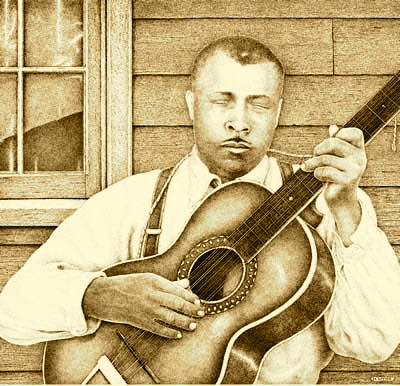
Blind Willie McTell - Atlanta 12-String


Some people call him the greatest bluesman of all time. I don't think that's true, at least not so long as Son House and Skip James are still riding the great greyhound bus in the sky. But coming in closely behind them, Blind Willie McTell holds his own with the best of the rest of 'em. Though it is thought that he took the name 'Blind Willie' to piggyback on the popularity of Blind Willie Johnson (to be fair, his name was actually William and he was actually blind, unlike "Sonny Boy Williamson II"), his style owes little to the earlier revenant. Actually, McTell's resonant 12-string and plaintif tenor voice align him more closely with the heavenly stylings of Washington Phillips, who in turn influenced Blind Willie Johnson.

It is not known whether Blind Willie McTell ever heard Washington Phillips.

What is known is that Bob Dylan (who actually did steal his name from someone else), knew about Mr. McTell, and revered him so much that Bob wrote a song about him. And while it's one of Dylan's better songs of his post 1975 period, it doesn't even stand up to the worst of Willie's. Perhaps it's the pauper's diction, nasal voice, or predictable chord accents. Really, the only connection I can see between the two is the 12-string guitar.

You can leave Bobby Zimmerman to the dogs. This here's music for god's jukebox.


Seen the arrow on the doorpost
Saying, "This land is condemned
All the way from New Orleans
To Jerusalem."
I traveled through East Texas
Where many martyrs fell
And I know no one can sing the blues
Like Blind Willie McTell

Well, I heard the hoot owl singing
As they were taking down the tents
The stars above the barren trees
Were his only audience
Them charcoal gypsy maidens
Can strut their feathers well
But nobody can sing the blues
Like Blind Willie McTell


See them big plantations burning
Hear the cracking of the whips
Smell that sweet magnolia blooming
(And) see the ghosts of slavery ships
I can hear them tribes a-moaning
(I can) hear the undertaker's bell
(Yeah), nobody can sing the blues
Like Blind Willie McTell

There's a woman by the river
With some fine young handsome man
He's dressed up like a squire
Bootlegged whiskey in his hand
There's a chain gang on the highway
I can hear them rebels yell
And I know no one can sing the blues
Like Blind Willie McTell

Well, God is in heaven
And we all want what's his
But power and greed and corruptible seed
Seem to be all that there is
I'm gazing out the window
Of the St. James Hotel
And I know no one can sing the blues
Like Blind Willie McTell

- Bob Dylan


Biography
by Bruce Eder
Willie Samuel McTell was one of the blues' greatest guitarists, and also one of the finest singers ever to work in blues. A major figure with a local following in Atlanta from the 1920s onward, he recorded dozens of sides throughout the '30s under a multitude of names -- all the better to juggle "exclusive" relationships with many different record labels at once -- including Blind Willie, Blind Sammie, Hot Shot Willie, and Georgia Bill, as a backup musician to Ruth Mary Willis. And those may not have been all of his pseudonyms -- we don't even know what he chose to call himself, although "Blind Willie" was his preferred choice among friends. Much of what we do know about him was learned only years after his death, from family members and acquaintances. His family name was, so far as we know, McTier or McTear, and the origins of the "McTell" name are unclear. What is clear is that he was born into a family filled with musicians -- his mother and his father both played guitar, as did one of his uncles, and he was also related to Georgia Tom Dorsey, who later became the Rev. Thomas Dorsey. 


McTell was born in Thomson, GA, near Augusta, and raised near Statesboro. McTell was probably born blind, although early in his life he could perceive light in one eye. His blindness never became a major impediment, however, and it was said that his sense of hearing and touch were extraordinary. His first instruments were the harmonica and the accordion, but as soon as he was big enough he took up the guitar and showed immediate aptitude on the new instrument. He played a standard six-string acoustic until the mid-'20s, and never entirely abandoned the instrument, but from the beginning of his recording career, he used a 12-string acoustic in the studio almost exclusively. McTell's technique on the 12-string instrument was unique. Unlike virtually every other bluesman who used one, he relied not on its resonances as a rhythm instrument, but, instead, displayed a nimble, elegant slide and finger-picking style that made it sound like more than one guitar at any given moment. He studied at a number of schools for the blind, in Georgia, New York, and Michigan, during the early '20s, and probably picked up some formal musical knowledge. He worked medicine shows, carnivals, and other outdoor venues, and was a popular attraction, owing to his sheer dexterity and a nasal singing voice that could sound either pleasant or mournful, and incorporated some of the characteristics normally associated with White hillbilly singers. 

McTell's recording career began in late 1927 with two sessions for Victor records, eight sides including "Statesboro Blues." McTell's earliest sides were superb examples of storytelling in music, coupled with dazzling guitar work. All of McTell's music showed extraordinary power, some of it delightfully raucous ragtime, other examples evoking darker, lonelier sides of the blues, all of it displaying astonishingly rich guitar work. 

McTell worked under a variety of names, and with a multitude of partners, including his one-time wife Ruthy Kate Williams (who recorded with him under the name Ruby Glaze), and also Buddy Moss and Curley Weaver. McTell cut some of his best songs more than once in his career. Like many bluesmen, he recorded under different names simultaneously, and was even signed to Columbia and Okeh Records, two companies that ended up merged at the end of the '30s, at the same time, under two names. His recording career never gave McTell quite as much success as he had hoped, partly due to the fact that some of his best work appeared during the depths of the Depression. He was uniquely popular in Atlanta, where he continued to live and work throughout most of his career, and, in fact, was the only blues guitarist of any note from the city to remain active in the city until well after World War II. 


McTell was well-known enough that Library of Congress archivist John Lomax felt compelled to record him in 1940, although during the war, like many other acoustic country bluesmen, his recording career came to a halt. Luckily for McTell and generations of listeners after him, however, there was a brief revival of interest in acoustic country-blues after World War II that brought him back into the studio. Amazingly enough, the newly founded Atlantic Records -- which was more noted for its recordings of jazz and R&B -- took an interest in McTell and cut 15 songs with him in Atlanta during 1949. The one single released from these sessions, however, didn't sell, and most of those recordings remained unheard for more than 20 years after they were made. A year later, however, he was back in the studio, this time with his longtime partner Curley Weaver, cutting songs for the Regal label. None of these records sold especially well, however, and while McTell kept playing for anyone who would listen, the bitter realities of life had finally overtaken him, and he began drinking on a regular basis. He was rediscovered in 1956, just in time to get one more historic session down on tape. He left music soon after, to become a pastor of a local church, and he died of a brain hemorrhage in 1959, his passing so unnoticed at the time that certain reissues in the '70s referred to McTell as still being alive in the '60s. 

Blind Willie McTell was one of the giants of the blues, as a guitarist and as a singer and recording artist. Hardly any of his work as passed down to us on record is less than first-rate, and this makes most any collection of his music worthwhile. A studious and highly skilled musician whose skills transcended the blues, he was equally adept at ragtime, spirituals, story-songs, hillbilly numbers, and popular tunes, excelling in all of these genres. He could read and write music in braille, which gave him an edge on many of his sighted contemporaries, and was also a brilliant improvisor on the guitar, as is evident from his records. McTell always gave an excellent account of himself, even in his final years of performing and recording.


Blind Willie McTell - Atlanta 12-String

Year: 1975
Label: Atlantic

Review
by Bruce Eder
In 1949, a brief flurry of interest in old-timey country blues resulted in this 15-song session by Blind Willie McTell for the newly formed Atlantic Records. Only two songs, "Kill It Kid" and "Broke Down Engine Blues," were ever issued on a failed single, and the session was forgotten until almost 20 years later. McTell is mostly solo here, vividly captured on acoustic 12-string (his sometime partner Curley Weaver may have been present on some tracks), and in excellent form. The playing and the repertory are representative of McTell as he was at this point in his career, a blues veteran rolling through his paces without skipping a beat and quietly electrifying the listener. Songs include "Dying Crapshooter's Blues," "The Razor Ball," and "Ain't I Grand to Live a Christian."

Tracks:
1. Kill It Kid - McTell - 2:33
2. The Razor Ball - McTell - 2:53
3. Little Delia - McTell - 3:02
4. Broke Down Engine - McTell - 2:46
5. Dying Crapshooter's Blues - McTell - 3:06
6. Pinetop's Boogie Woogie - Gimbel, Smith - 2:49
7. Blues Around Midnight - McTell - 2:46
8. Last Dime Blues - McTell - 2:49
9. On the Cooling Board - McTell - 3:08
10. Motherless Children Have a Hard Time - McTell - 2:56
11. I Got to Cross the River Jordan - McTell - 4:00
12. You Got to Die - McTell - 3:12
13. Ain't It Grand to Live a Christian - McTell - 2:38
14. Pearly Gates - McTell - 3:22
15. Soon This Morning - McTell - 2:40


July 19, 2010

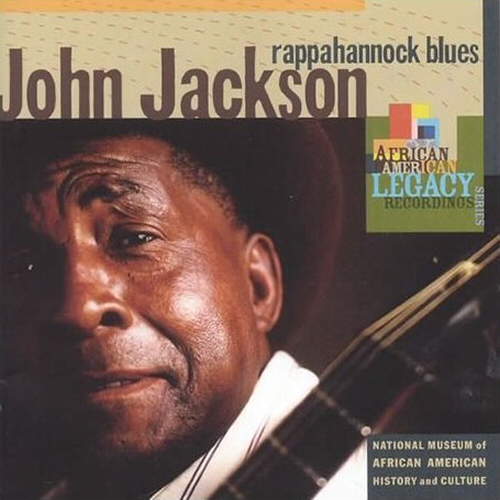
John Jackson - Rappahannock Blues


I haven't really posted much of anything lately, owing to the fact that I now have two jobs and little time for reviews... so I also neglected to post this news which is now a month late, about a newly-released album by folk-blues troubador John Jackson, which was sent to me by Smithsonian Folkways. Without further ado:

John Jackson represented, if anything, the crossroads. No, not the silly Robert Johnson devil-styled crossroads. I mean the place where different traditions meet. Blues, Folk, Minstrel/Medicine-Show Tunes and Appalachian banjo styles all came together in a single man with a warm Virginia country voice. John Jackson is the place where Blind Blake meets Mississippi John Hurt, Furry Lewis, Brownie McGhee, the Delmore Brothers, Blind Boy Fuller, and Hobart Smith. John Jackson is the place where they all sit down on a shady southern mountain house porch and pick some guitars after they've done all the picking of cotton & corn. There is nothing about this music that is not raw. Like fresh-picked wheatgrass, it will wake you up. Like a fresh-dug grave, it will lay you to rest in a deep, warm, earthy bed. And you'll be dreaming of candy on a stick, rocks and gravel, and a long Cadillac car with a little bump in the back-left wheel.


Biography by Barry Lee Pearson
For much of his life, John Jackson played for country house parties in Virginia, or around the house for his own amusement. Then in the '60s he encountered the folk revival, becoming the Washington, D.C. area's best-loved blues artist. Undoubtedly one of the finest of traditional Piedmont guitarists, Jackson exemplified the songster tradition at its best. His eclectic repertoire embraced the music of his guitar heroes Willie Walker (who once visited his father's house), Blind Boy Fuller, and -- most notably -- Blind Blake. Besides the blues, rags, and dance tunes associated with these masters, Jackson played ballads, country songs, and what he termed "old folk songs," such as "The Midnight Special." His confident fingerpicking, down-home Virginia accent, and contagious good humor marked his performances, live or on record, as something special. A world-class storyteller and party-thrower as well as a National Heritage Award-winning musician, Jackson recorded a half-dozen albums and toured the world as often as he wanted to. He died of liver cancer on January 20, 2002.


John Jackson
By Greg Johnson

For over 36 years, John Jackson was arguably the purest exponent of Piedmont Blues working the festival circuit. An artist in possession of a wealth of musical knowledge, along with his strong baritone vocals, he kept the sound of the traditional southeastern United States alive. Passing on the songs of artists such as Blind Blake and Blind Boy Fuller to younger generations, as well as introducing his own finely-crafted material. His recent death has left a void that'll surely be hard to replace.

John Jackson was born in Woodville, Virginia, at the foothills of the Blue Ridge Mountains in Rappahannock County on February 25, 1924, the seventh of fourteen children. His parents were farmers by trade, but they also were working musicians who played for parties on holidays and weekends. This exposure captured young John's attention early and he began teaching himself to play his father's guitar by the age of four. It was evident to his family that there was something magical in the child's desire and an older sister purchased a guitar for him when he was just five.

Along with his family's participation as active performers, John also loved to listen to the collection of records his parents owned. They consisted of early Country and Blues artists; people such as Jimmie Rodgers, Blind Lemon Jefferson, Blind Boy Fuller, and especially Blind Blake. John studied the 78s passionately, learning the chord progressions as closely as he could. Another individual that the youngster found as a teacher came from the unlikely source of a water boy on a chain gang who went by the name of Happy. While working on the construction of I-29-211, Happy found the time to offer lessons to young Jackson.

Jackson never truly had a formal education. He was forced to leave school after only attending a few short months in the first grade to assist his family on the farm. Because of this, Jackson never learned to read or write.

By the time he was in his early teens, he had joined his parents working the local house-parties. He continued to play with them throughout the 1930s and well into the 1940s. But, by the end of the `40s, he became disenchanted with music, feeling that it led to violent behavior and walked away from it altogether.

In 1950, John Jackson moved to Fairfax County, Virginia, near Washington, D.C. Now a family man himself, with his wife Cora and their children, Jackson took work on a dairy farm. In 1954, he took on the occupation of a grave digger at the Oakwood Cemetery in Falls Church, Virginia. It was a job that he enjoyed and would hold onto throughout his life, even well after he became a recognized musician. Music came back into Jackson's life around this same time. A friend in need of money sold his guitar to Jackson and soon he was playing for family friends and local children in his spare time.

While driving through Fairfax County in 1964, folklorist Chuck Perdue stopped at an Amoco gas station. What he didn't expect to find was Jackson, teaching guitar to a mailman. Stunned by the brilliant playing of Jackson, he introduced himself and soon had the guitarist performing in coffee houses in the greater Washington area. It was at the height of the age of "Rediscovery" for Blues and Folk artists and Jackson's knowledge of the Piedmont style was a natural fit.

John Jackson recorded his first album for the Arhoolie label in 1965. Titled, "Blues And Country Dance Songs From Virginia" it was a fine example of his deep repertoire, containing Reels, Rags, Gospel, Hillbilly tunes and Blues. It was the first of eight albums that Jackson would release for Arhoolie during his lifetime and it opened the door for his demand at festivals around the world.

Despite that demand, Jackson very rarely liked to travel far from his home in Falls Church. Over his career, he would play in more than 60 countries, at venues such as Carnegie Hall and the Royal Albert Hall. He would play for royalty and also was a featured performer at the White House for the annual Labor Day Picnic during Jimmy Carter's term as president. In 1986, Jackson was also honored with a National Heritage Fellowship from the National Endowment for the Arts. But, it wasn't until 1999 that he actually played formally for his own hometown when he appeared at the annual Falls Church Watch Night held to celebrate New Year's Eve, an event he would repeat for the remaining two years of his life.

Nineteen ninety-nine also saw the release of Jackson's final recording, "Front Porch Blues" on the Alligator label. The album would recap three W.C. Handy nominations that year, including one for the "Acoustic Album of the Year".

Shortly after Christmas 2001, John Jackson was diagnosed with liver cancer. It was unfortunately in such an advanced state that surgery was not an option. Despite his condition, Jackson appeared at the Falls Church Watch Night celebration a few days later, which would be his final performance. On the afternoon of January 20, 2002, he died while at home of kidney failure. It was reported that he was comfortable and not in pain. He was 77.

On the following Thursday, January 24, the life of John Jackson was celebrated by his friends and family. Many musicians, including the members of Saffire - The Uppity Blues Women and Cephas & Wiggins were all in attendance offering reminiscences of Jackson while his music quietly played in the background. He was later buried at Pleasant Valley Memorial Park, in Annandale, VA.

During his career, John Jackson was called the "King of the Piedmont Blues." But, he was more than just a musician; he was also a strong participant in the Civil Rights movement for Northern Virginia. Falls Church was the location of the first rural chapter of the NAACP and Jackson was a key member from its inception. He very rarely turned down any offer to perform as a benefit for this cause. He also wished to see the tradition of Piedmont's music to be remembered and to prosper as well. During the last month of his life, Jackson had began planning for a Center for Piedmont Blues in Falls Church in association with the local Tinner Hill Heritage Foundation. His musical legacy will surely carry on through this endeavor.


Obituary by John Pareles:

John Jackson, a master of the Piedmont tradition of blues, country and ragtime, died on Jan. 20 at his home in Fairfax, Va. He was 77.

The cause was kidney failure, but he had also suffered from lung and liver cancer, said his manager, Trish Byerly.

In a honey-cured Virginia drawl, backed by the gentle, spunky fingerpicking of his acoustic or steel guitar, Mr. Jackson sang a repertory that summed up rural life in the early 20th century. There were sly blues, hoedown tunes, storytelling ballads and God-fearing warnings of mortality. Mr. Jackson had only a first-grade education, and he continued to work as a gravedigger for decades after he was discovered during the 1960's blues and folk revival. In 1986 he was given the National Heritage Fellowship by the National Endowment for the Arts.

Mr. Jackson was born Feb. 25, 1924, the seventh of 14 children in a farm family in Rappahannock County, Va. His parents, Suttie and Hattie Jackson, played at parties on weekends, and Mr. Jackson started playing guitar when he was 4.

He learned songs from his parents and from the family Victrola, listening to records by rural bluesmen like Blind Lemon Jefferson and Blind Blake, as well as by country singers like Uncle Dave Macon and Jimmie Rodgers. Mr. Jackson learned slide guitar from a chain gang convict named Happy.

He dropped out of school to do farm work and learned to read and write later in life. Mr. Jackson continued performing with his parents into the 1940's, but because he felt music encouraged violent behavior, he quit by 1950.

He married and moved with his wife, Cora, to a dairy farm in Fairfax, Va., where he worked as a cook, driver and caretaker for the farmer.

In the early 60's two friends pawned him a Gibson J50 guitar for $50. Mr. Jackson started playing again, entertaining children. He kept the guitar for the rest of his career, calling it Stand By because, he said, it always stood by him.

A mailman heard Mr. Jackson playing for neighbors and asked for lessons. Mr. Jackson was instructing him at the local gas station, where the mailman had a second job, when the president of the Folklore Society of Greater Washington, Chuck Perdue, pulled in for gas and stayed to listen. He encouraged Mr. Jackson to start performing at coffeehouses around Washington.

Arhoolie Records released Mr. Jackson's first album, ''Blues and Country Dance Songs From Virginia,'' in 1965, and he made his way onto the blues-festival circuit. He performed at a Labor Day picnic at the White House during the administration of President Jimmy Carter.

In 1980 he was part of the United States Information Agency's ''Southern Music U.S.A.'' tour, which went to Asia, the Middle East and the Balkans. Mr. Jackson made albums for Arhoolie (which released more material from his 1964 sessions in 1999), Rounder and Alligator Records, most recently ''Front Porch Blues,'' released by Alligator in 1999. His final show was on Dec. 31 in Falls Church, Va.

Mr. Jackson is survived by two brothers, Freddie and Thomas, and a sister, Roberta Wigington; four children, Lee Jackson, James Jackson, Timothy Jackson and Cora Beth Johnson; seven grandchildren; and five great-grandchildren.

Although he regularly played 100 to 125 shows a year, Mr. Jackson also continued to work as a gravedigger.

''He took pride in being a good gravedigger,'' said Joe Wilson, the executive director of the National Council for Traditional Arts, who produced ''Front Porch Blues.'' ''His holes were always exactly squared off. He was a workman.''

- from the Times

Read an essay called 'Rememberin John Jackson' here.


SMITHSONIAN FOLKWAYS SPOTLIGHTS BLACK APPALACHIAN MUSICIAN JOHN JACKSON'S 'RAPPAHANNOCK BLUES’ OUT JUNE 15

Smithsonian Folkways is releasing 'Rappahannock Blues,' a 20-track album by John Jackson, on June 15. Jackson (1924–2002) was the most important black Appalachian musician to come to broad public attention during the mid-1960s. The album is the latest addition to Smithsonian Folkways African American Legacy Recordings series, co-produced with the Smithsonian National Museum of African American History and Culture.

Raised in a large, musical farm family in Rappahannock County, Virginia, Jackson got his first guitar, bought by his oldest sister Mary for $3.75 from a catalog, when he was nine. He learned a wide-ranging stock of songs from his father, his aunt Etta and from 78-rpm recordings by the Carter Family, Jimmie Rodgers, Blind Blake and Blind Lemon Jefferson, but after a fight at a house party in 1946, didn't touch an instrument for nearly 20 years.

Rediscovered at a gas station by folklorist Chuck Perdue, Jackson was quickly recorded by Arhoolie in 1964, laying down 90 songs in 12 hours in his first session. For the next three decades, he enthralled audiences with his vintage style and repertoire, though he worked day jobs his entire career, including a long-stint as a gravedigger and cemetery caretaker.

Although black Appalachian music never received the attention given to the transition from Delta blues to Chicago blues and then to rock and roll, in the mountains a shared black and white string band tradition served as the basis for American roots music, ranging from bluegrass to regional rockabilly. Emphasizing that shared heritage, Jackson toured Asia in 1984 with Ricky Skaggs, Buck White and Jerry Douglas. Two years later, he was designated a National Heritage Fellow by the National Endowment for the Arts.

Culled from hundreds of live concert recordings in the Smithsonian Folkways archives, the twenty tracks of 'Rappahannock Blues,' which include Blind Blake's "Too Tight Rag," "West Coast Rag" and "Diddy Wah Diddy," Mississippi John Hurt’s “Candy Man," and "Red River Blues," recorded by Josh White as “Blood Red River” and by Blind Boy Fuller as “Bye Bye Baby,” highlight John Jackson the way he said he most wanted to be remembered — as a bluesman. All but two of the tracks are previously unreleased.

The release of 'RAPPAHANNOCK BLUES' will be celebrated at the “2010 Tinner Hill Blues Festival – A Tribute to John Jackson”, June 10-13, 2010 in Falls Church, VA (Washington DC area). For more information, visit http://www.tinnerhill.org/blues/

John Jackson - Rappahannock Blues

Year: 2010
Label: Smithsonian Folkways


Review by Steve Leggett
Appalachian guitarist, banjo player, and singer John Jackson, who died in 2002, was a bona fide American treasure whose recorded work and live performances were amazingly consistent and refreshingly real and unadorned. He was a fine guitarist in several styles -- he could fingerpick in the Piedmont style, then pick up a slide and go Delta -- and his claw-hammer banjo style bubbled with joy, while his singing was strong, warm, and always appropriate to whatever song he was doing. This set is drawn from live performances Jackson did between the mid-'70s and the late '90s, and it focuses on the blues end of his repertoire with solid and refreshing versions of blues pieces like “Rocks and Gravel” and “Frankie and Johnny,” as well as a gorgeous slide guitar take on the traditional “John Henry.” He also tackles a rag with “John Jackson’s Breakdown,” and pulls out the banjo for the string band reel “Cindy,” making this a fine introduction to a remarkably gifted folk musician.

Track Listing
1. Rocks and Gravel (John Jackson) *
2. Too Tight Rag (Blind Blake) *
3. Candy Man (Mississippi John Hurt) *
4. Truckin’ Little Baby (Blind Boy Fuller)*
5. Railroad Bill (traditional)
6. Nobody’s Business (If I Do) (traditional) *
7. Don’t You Want to Go Up There (trad.; arr. John Jackson) *
8. The Year Clayton Delaney Died (Tom T. Hall) *
9. John Jackson’s Breakdown (John Jackson) *
10. Red River Blues (traditional) *
11. Brown’s Ferry Blues (The Delmore Brothers) *
12. Cindy (trad.; arr. John Jackson) *
13. You Ain’t No Woman (Bill Jackson) *
14. John Henry (traditional)
15. Diddy Wah Diddy (Blind Blake) *
16. Just a Closer Walk with Thee (Kenneth Morris) *
17. Frankie and Johnny (traditional) *
18. Don’t Let Your Deal Go Down (trad.; arr. John Jackson) *
19. Step It Up and Go (Blind Boy Fuller; arr. John Jackson) *
20. West Coast Rag (Blind Blake) *

(*denotes previously unreleased track)

Cheers to Smithsonian Folkways for continuing to release these important recordings; check out the album here, where you can listen to all the tracks, download the booklet, and get a free download Frankie and Johnny, plus the opportunity to purchase a physical or downloadable copy of the album. Remember, Folkways is a non-profit. They're good people to support!


also see their Artist Spotlight page on him, with video, text, & rare photos.

also check out the Wirz Discography


April 24, 2010

'Spider' John Koerner - Spider Blues


Well it's been forever since I've posted anything blues- or jug-band-related, so I thought I'd reward the patience of my blues-loving readers and post this rarity. The most striking thing about this record, to me, is how it just feels subtly 'off'. As in, this is a white kid trying his very best to sound like a big black guy, and getting really close - I mean blindfold test close! He even took the 'handle' of Spider to add to his name. A la Blind Joe Death, you know? Same impulse, different direction. Like John Hammond too. But it's still, not quite right: not quite natural. But it's a subtle point, and aside from that, the record's really fun, the sound sparse bouncy, the playing finely honed but still raw. Really it's worth the price just for the last track, Rent Party Rag, in which Spider John sounds like a one-man-jug-band. And, apparently, he was the primary influence on Peter Lang in his early development.

"Alone among the young blues revivalists, Koerner had a sound that was completely idiosyncratic and personal. From the first guitar riff, there was never any doubt about who was playing. Today the material has changed but the sound is intact...spare and funky, with lots of open spaces between oddly placed notes, all of it held together with his impeccable timing."--Blueswire

Anyone who maintains that a white man can’t sing the blues has likely never come across “Spider” John Koerner. A Rochester native who was integral to the Minneapolis, Minnesota folk scene of the ’60s, Koerner has spent much of his career creating albums that inspired generations of white folk artists to explore their roots.

Bob Dylan, who encountered him in the Dinkytown neighborhood near the University of Minnesota, sang his praises in Chronicles; so have artists as diverse as Bonnie Raitt and David Bowie. Unlike the popular pop adaptations of stolen and reinterpreted songs in the folk style that were passed off as real folk music (from the Kingston Trio, the Weavers and Peter, Paul and Mary), Koerner and his associates Dave “Snaker” Ray and Tony “Little Sun” Glover made music that felt authentic. Though Ray passed away some years back, Koerner has performed consistently both with Glover and also solo, which is a boon to those who remember the ’60s as well as those who experienced it on TV.

As any self-respecting listener is well aware, the history of American popular music is a rather messy affair, characterized by a rape and tiptoe two-step that’s anything but pretty. What’s more difficult to admit is that sometimes both tendencies appear in the foreground at once; when a British “blues” band co-opts a Robert Johnson tune in full, it’s not entirely clear whether they’re playing tribute or trampling or both. It may be better to trust your gut, and it’s hard to trust the saccharine cleanliness of blues better heard in the parlor than in the barroom. And the brilliant thing about Koerner, Ray and Glover is that there appears to be less of a gulf between them and Huddie Ledbetter than with many of their Minnesota contemporaries. Blues is a dirty affair, after all, and Koerner’s music is anything but pristine.

Woe to the musician whose second album was praised in the liner notes for its “real understanding of Negro musical styles” and how it is “unbelievable that any white musician could come so close to the sound of Negro performance.” But it’s a challenge to listen to “Hangman” and “Ramblin’ Blues” from Blues, Rags & Hollers and distinguish the Ledbetter from the Koerner.

Speaking to him from his home on New Year’s Eve, Koerner admitted that the whole thing was, in a sense, pretty “weird.” “It’s kind of strange that at that age, I wanted to act like a black guy. And be like black guys — some of whom didn’t know how to read. Here we were, college kids, who got it in our mind to do like it was in the songs — drinking and partying, and chasing women.” Whatever the intentions, though, Koerner, Ray and Glover created music that went beyond mirroring the idiom of blues to create something wholly original within a tradition. It is nothing less than inspiring that Koerner is keeping the flame burning.

[Text by Luke Z. Fenchel; From the Ithaca Times]

Biography by William Ruhlmann
"Spider" John Koerner has been an influential practitioner of traditional folk music and country blues since the days of the late-'50s/early-'60s folk revival. Both in his group, Koerner, Ray & Glover, and on his own, he has helped popularize early folk and blues music through his performances and recordings, directly affecting the careers of Bob Dylan and Bonnie Raitt, and influencing many others.

Koerner grew up in Rochester, NY, where he was initially interested in flying, not music. He obtained a student glider-pilot license at 15, and when he graduated from high school in 1956, he enrolled at the University of Minnesota in Minneapolis to study aeronautic engineering. But in 1958, he was introduced to folk music by a campus acquaintance and took to it heavily, learning to play the guitar and dropping out of college to travel the country as a folksinger. He briefly joined the Marine Corps, then returned to Minneapolis in the fall of 1959, where he became a fixture in the coffeehouses of Dinky Town, the bohemian area around the University of Minnesota. There he encountered and played with a new undergraduate, Bob Zimmerman, who soon took the stage name Bob Dylan. He also met guitarist Dave Ray, who introduced him to harmonica player Tony Glover in the spring of 1962 while they were in New York City. The three began to play together there and back in Minneapolis formed the group Koerner, Ray & Glover. They adopted nicknames in the manner of old blues players: Ray became "Snaker," Glover "Little Sun," and Koerner, in reference to his long, skinny arms and legs, "Spider."

Koerner, Ray & Glover recorded an album, Blues, Rags & Hollers, that was released on the tiny Milwaukee-based independent Audiophile Records label in June 1963. Folk label Elektra Records then signed the group and bought the album from Audiophile, reissuing it in an abridged form in November. Lots More Blues, Rags & Hollers followed in June 1964. The trio appeared at the Newport Folk Festival in July, and their performance was recorded for the Vanguard Records album Newport Folk Festival 1964: Evening Concerts III (released in May 1965) and filmed for the motion-picture documentary Festival (which opened in October 1967). The group was always a loose aggregation, frequently breaking down in performance into duos and solos, and it was natural for the three to play separately. In 1965, Koerner and Ray each made solo albums for Elektra (actually assembled by the label from solo performances done at Koerner, Ray & Glover recording sessions). Koerner's was Spider Blues, released in May. He then appeared at the 1965 Newport Folk Festival, his performance captured on the Vanguard LP Festival -- Newport Folk Festival 1965, released in 1966. Koerner, Ray & Glover made one more album for Elektra, The Return of Koerner, Ray & Glover, released in October 1965, and an archival album of 1963-64 live recordings, Good Old Koerner, Ray and Glover (aka Live at St. Olaf Festival), was released by Mill City Records in January 1972. But the trio ceased to be a full-time act by 1966.

Koerner continued to play the folk circuit as a solo performer, appearing at such prestigious clubs as the Ash Grove in Los Angeles and Club 47 in Cambridge, MA. He made a trip to England in 1968 and again appeared at the Newport Folk Festival in 1969. That year, Elektra released his second album, Running, Jumping, Standing Still, which featured piano player Willie Murphy and included many original compositions, among them "I Ain't Blue," which Bonnie Raitt later covered on her self-titled debut album. By the early '70s a lack of success prompted Koerner to retire to Copenhagen, Denmark, after recording the album Music Is Just a Bunch of Notes for Dave Ray's Sweet Jane Records label. (The LP was released in May 1972.) His European retirement lasted for a year or so, its ending formally marked by another Sweet Jane release, Some American Folk Songs Like They Used To, in October 1974. The album showed that he had moved more toward traditional folk music rather than the folk-blues with which he had been associated.

Koerner moved back to Minnesota in 1977 and maintained his career on a part-time basis while also working outside music. He returned to greater national visibility due to his association with Red House Records, which released his first album in more than 11 years, Nobody Knows the Trouble I've Been, in 1986 (it had been recorded in 1980), followed by Raised by Humans in March 1992 and StarGeezer in May 1996. Red House also reissued the Koerner, Ray & Glover albums Blues, Rags & Hollers, Lots More Blues, Rags & Hollers, and The Return of Koerner, Ray & Glover, as well as Koerner's Running, Jumping, Standing Still, on CD. In 1997, a new Koerner, Ray & Glover live album, One Foot in the Groove, was released on Tim/Kerr Records. Koerner underwent emergency triple bypass surgery in January 1998, but recovered and returned to performing. Lacking health insurance, he suffered astronomical medical bills, but a series of benefit concerts paid them off. In the early years of the new millennium, he continued to perform, both solo and as a member of Koerner, Ray & Glover.


John Koerner - Spider Blues

Year: 1965
Label: Elektra

Side A
- Good Luck Child *
- I Want To Be Your Partner
- Nice Legs
- Spider Blues *
- Corrina
- Shortnin' Bread
- Ramblin' And Tumblin'
- Delia Holmes

Side B
- Need A Woman
- I Want To Do Something
- Baby, Don't Come Back
- Hal C. Blake
- Things Ain't Right *
- Rent Party Rag

* with Tony Glover on mouth harp

note, a couple of tracks have some ripping errors, due to my computer's low-memory. I might try to do a re-rip at some point but just enjoy the bizarre time-changes for now...

vinyl, cleaned | mp3 >256kbps vbr | w/o cover

This album so far as I know has never been reissued, either in physical or digital form.

But you can find others On Muddy Sava Riverbank, and be sure to check out the man's website - he's still gigging!

October 12, 2009

Debashish & Bob Brozman - Sunrise


Well, folks, it's that time again. I'm heading off to travel around the misty isles of Britain and Ireland again, so don't expect any more posts for a while. But I thought I'd leave you with this special treat to savor while I'm away. I really shouldn't have to say anything to convince you this is wonderful music. The names speak for themselves. Two of the greatest slide guitarists in the world produce one of the greatest works of East-West fusion. Sweet and spicy, like a good curry. Like Ry Cooder & Vishwa Mohan Bhatt's grammy-award-winning album 'A Meeting By the River', but better. Mmmmmmm.....!


Bob Brozman's journey into India and its music began with Debashish Bhattacharya, who Bob considers the greatest slide guitarist of all time in any genre. Bob first encountered Debashish in 1996, when Bob, Debashish, and Martin Simpson all had recent concert video releases with Stefan Grossman's Vestapol videos. Stefan suggested getting together for a "World Of Slide Guitar" US tour, and the very first show in Vancouver, BC was the moment the that the three actually met, having arrived from different destinations. Debashish arrived from India with his brother Subhashis, master tabla player; Bob came in from Europe; and Martin arrived from California. There was no time for any rehearsal. The opening notes of this tour began with a simple agreement to play in D minor. From that point, only attentiveness, communication, and emotion built the music. Several cities deemed this concert to be their concert of the year. The 1996 tour included the West coast, Midwest, and East coast. The trio toured again in 1997, this time on the West coast, Canada and Hawaii.

In January 1998, Bob went to Calcutta for a residence and recording with Debashish and Subhashis. Being in Calcutta is a very intense experience, recommended for all Americans to witness how much of the world lives. SUNRISE was the result of a recording made in stifling 110-degree heat. The compositions on this recording were created to give the listener a true mixture of east and west. Drawing on Debashish's roots in Indian classical and folk music, and Bob's roots in blues, Hawaiian, Caribbean, jazz, and African music, these two guitarists employed both their cultural differences and their philosophical commonalities to compose a variety of completely new music. SUNRISE was released in 1998 in India only, and remains difficult to obtain.

Debashish Bhattacharya

Calcutta, India's Debashish Bhattacharya started learning Indian music from his parents before he learned the alphabet. In his childhood he mastered many Indian classical instrumental styles as well as vocal music from different musical teachers in Calcutta. He became a disciple and student of Brij Bhushan Khabra, the father of Indian classical guitar, for 10 years, and also trained under Ajoy Chakraborty, the eminent Indian vocalist. He has also studied with Ustad Ali Akbar Khan.

As a performer, Debashish gave his first guitar recital at the age of four on the All India Radio, and in a public concert. In his twenties, he evolved a unique style of playing guitar, synthesizing selected features of various other instruments such as the Veena, Sitar, Sarod and Kannur. In 1984, he was awarded the President of India award at the age of 21.

Debashish developed his innovative Hindustani slide guitar after years of research and experience. It consists of a Hofner acoustic F hole guitar, with a total of 22 strings. He added a platform of wood running the length of the guitar's neck, mounted with 17 tuning gears. This piece of wood extends the width of the neck, making room for twelve sympathetic strings, and five supporting strings for additional versatility. Above the 5 normal (sliding melody) strings, there is a pair of ckikari strings, as on a sitar. One of Debashish's innovations was to move them to the treble side of the guitar, which enables far more complex playing, since their rhythmic drones can be played by the fingers, over other melodies simultaneously. Debashish plays this guitar while sitting cross legged, with the guitar held on the lap and played with a small steel bar, metal picks and a celluloid thumb pick.

Debashish is perhaps the greatest slide guitarist who has ever lived. He has, both through creating the actual design of the instrument, and through his incredible talent and discipline, elevated the Hindustani slide guitar to be the highest evolution of slide guitar anywhere. Though he is often compared to V.M. Bhatt, there is little basis for comparison, because Debashish's music has far greater musical range, physical dexterity, and emotional depth. To develop his playing, he has undergone decades of disciplined study of Indian vocal technique combined with his instrumental work. Debashish can sing perfectly in parallel with every blindingly fast melody he plays. Possessed of a very open musical mind, Debashish is eager and more than qualified to collaborate and truly blend with musicians from any other country.

Since 1996, his collaboration with Bob has resulted in two "World of Slide" tours of the USA and Canada, plus more appearances with Bob, and with The International Troupe, in Canada and South Africa. Most recently, Debashish has toured Europe and recorded with John McLaughlin and his latest incarnation of Shakti. In 2002, Debashish returned to Quebec with Bob, and later reunited with Bob in California for the recording of MAHIMA, released June 2003.


Subhashis Bhattacharya - biography

Subhashis is a leader of his generation of Indian percussionists. As the younger brother of Debashish, Subhashis grew up steeped in the deep musical background of the Bhattacharya family, learning melody and rhythm from infancy. His father Sri Sunil Bhattacharya taught him tabla and his mother, vocalist Smt. Manjushree Bhattacharya worked with him melodically when he was a toddler.

He started to make his presence felt in the music scene from childhood as a promising tabla player trained by teachers Sri Prabir Bhattacharya and Pt. Shyamal Bose. Now, he is considered to be a master player, and he continues to study with Pandit Anindo Chatterjee, the senior tabla maestro. He has regularly performed in every major Indian music festival, and has recorded four albums with Debashish and seven albums with Pandit Ajoy Chakrabarty.

Subhashis first toured outside of India in 1996 with Debashish and Bob. His skill and flexibility as percussionist on several instruments, rhythm arranger, and vocalist have since been heard on subsequent overseas tours in the USA, Canada, South Africa, Greece, Kuwait, Bangladesh, and Nepal. A leading studio musician in India, he has begun creating and leading large percussion ensembles, and his arranging skills are essential to the music on this album, as an equal participant in its creation. With meticulously tuned hand drums, he played intricate rhythms, plus melodic parts inside the rhythm section. Creating percussion landscapes by playing several instruments on multiple tracks gave Subhashis a sense of liberty, yielding one creative explosion after another.


Biography: Bob Brozman Today

Redefining musical diversity worldwide, Bob Brozman is a remarkably prolific artist whose wit, energy, and musical technique combine powerfully to create an unforgettable live performance. A master of slide, fingerstyle, and percussive guitar, Bob's exhilarating show spans the global and musical spectrum, and keeps audiences enthralled, begging for more of his endearing, infectious energy.

Bob's familiarity with diverse world music cultures produces a novel blending of rhythmic and timbral influences, unparalleled in today's musical environment. His rhythmic dexterity resonates with elements of blues, jazz, Gypsy swing, calypso, sega, and even the most modern hip-hop and ska beats.

Likewise, his chords and harmonies articulate an acute blend of timbres from Hawaiian, Indian, African, Japanese/Okinawan, Caribbean, and American roots blues. His fingerwork has been described in world press as uniquely staggering, yet full of humor. Bob has a collection of hand-tricks that make audiences look for electronic effects that in fact don't exist: his show is the clean product of acoustic genius.

Bob's disarming talent for humor and rapport invariably adds spice to his already well-seasoned repertoire of music. A lifelong study of ethnomusicology and the global migration of musical styles ensures Bob's committed attention and respect to each of the cultures in his repertoire. He casually shares historical facts with his audiences, and charms them with his ability to integrate local languages into his show: over the years, Bob has taught himself useful phrases in over 30 languages, which he regularly uses both on stage and off.

Undoubtedly, however, Bob's preferred language is music - which he speaks fluently, around the world. His most recent projects have rendered him a true player in the world music scene. Since 2000, Bob has completed 15 full-length recordings, both solo and with reknown artists from around the world. Most recently, POST-INDUSTRIAL BLUES (Ruf Records) and LUMIÈRE(World Music Network) have proven Bob's virtuosity in both the blues and world music genres. His 2005 release SONGS OF THE VOLCANO (CD/DVD) documents Bob's two journeys to Papua New Guinea in 2003 and 2004, when he recorded with 60 musicians from five string bands. Other notable projects include the 2003 release of MAHIMA (with Debashish Bhattacharya, India); the 2002 release DIGDIG (with René Lacaille, La Réunion Island); as well as JIN JIN (with Takashi Hirayasu, Okinawa); OCEAN BLUES (with Djeli Moussa Diawara, Guinea); IN THE SADDLE (with Ledward Kaapana, Hawaii); NANKURU NAISA (again with Hirayasu); TONE POEMS III (with David Grisman and Mike Auldridge, USA); SUNRISE (again with Bhattacharya); ROLLING THROUGH THIS WORLD (with Jeff Lang, Australia); GET TOGETHER (with Woody Mann, USA); and FOUR HANDS SWEET & HOT (with Cyril Pahinui, Hawaii). Bob's 2005 solo release BLUES REFLEX was nominated for The Blues Foundation's 2007 Blues Music Awards, in the category of "Acoustic Album of the Year."

An abundance of projects such as these has established Bob as, according to one reviewer, "the man whose musical empathy seems to know no bounds." And as journalist Paul Fisher notes, "If music existed in another universe, Bob would be the Planet Earth's representative for an interplanetary collaboration."

Bob Brozman - Early Biography

Bob was born in New York in 1954 and has been involved in music since early childhood. A guitarist since age 6, Bob discovered National guitars at age 13. In their unique sound, the young Bob found his musical calling. He studied music and ethnomusicology at Washington University with an emphasis on the earliest roots of Delta blues. He has since also become a respected authority on historical Hawaiian music, publishing articles and amassing a large collection of 78rpm records. He has produced five re-issue albums from this collection on the Rounder and Folklyric labels, documenting the best of Hawaiian music from 1915 to 1935.

In 1988, Bob rediscovered the legendary 1929 Hawaiian recording artists, the Tau Moe Family. Together they recorded a landmark album, REMEMBERING THE SONGS OF OUR YOUTH, an historic re-creation of the family's genuine Hawaiian music from 60 years prior. The album was released in 1989 to rave international reviews, including the Library of Congress Select List Award. With N.E.A. funding, Bob began production of a feature-length documentary film about the Moe family and their amazing 54-year-long world tour.

Over the years, Bob's passion for National Guitars led him to build a large collection of these fascinating art-deco era instruments. After receiving a letter from the then-88-year-old inventor John Dopyera, Bob visited and became good friends with John and his family. This led to further research, and in 1993 Bob's massive work THE HISTORY AND ARTISTRY OF NATIONAL RESONATOR INSTRUMENTS was published internationally. He has also written for several music magazines concerning historical and instructional subjects.

Since his first solo album in 1981, Bob's repertoire of recordings has grown by over 30 titles to include 14 solo projects and at least a dozen collaborations with international friends. His ability to use the guitar as a portable translator of culture - coupled with his empathetic nature (through music, culture, and language), and seemingly boundless energy - enables him to establish genuine musical friendships based on respect and love of music. Bob's deep knowledge of musical history and arranging has enabled him to create large band arrangements and direct music for film, radio, television, and stage. In the last year, Bob produced albums for Ledward Kaapana and the Asylum Street Spankers; he also continues to generate educational and concert videos for Homespun Tapes and Vestopol Videos, respectively.

In 1999, Bob and Woody Mann co-founded International Guitar Seminars, which hosts over 120 students annually at sites in California, New York, and Canada. The team has pioneered a week-long, deluxe workshop in which students study day and night with a faculty that includes Bob, Woody, John Cephas, John Renbourn, Orville Johnson, Michael Dunn, Mary Flower, Mike Dowling, Jim Nichols, Pat Donahue, and more.

In addition to his rigorous touring and recording schedule, Bob is also an adjunct Professor at Macquarie University in Sydney, Australia, where he lectures on ethnomusicology and has been researching string music in Papua New Guinea and the tremendous number of islands around New Guinea and in the western South Pacific Ocean. Through the auspices of the University, Bob has been recording and collaborating with a wide variety of musicians from these interesting locales. He is also working toward the creation of a foundation to help third-world musicians to obtain the musical basics that western musicians take for granted, such as playable instruments, strings, tuning gears, and basic recording equipment.

Bob maintains a nearly superhuman tour schedule throughout the year, every year. Live performance tours are a vital part Bob's activity, in addition to his collaborations. He tours constantly throughout North America, Europe, Australia, Asia, and Africa.

As Bob says, "There's so much music out there…I guess I'll get some sleep in the next life!"


A BRIEF AND INTERESTING CHAIN OF EVENTS:

The slide guitar developed in many cultures around the world, but there are many deep connections between Hawaiian guitar and Indian music. The earliest known report of anyone playing slide guitar in Hawaii dates from 1876, when Gabriel Davion, an Indian boy kidnapped by Portuguese sailors and brought to Hawaii, is reported to have been playing slide guitar on his lap. Of course there are Indian instruments utilizing slide going back to earlier times. However, the normal western Hawaiian guitar was first introduced to India by Bob's Hawaiian guitar guru, Tau Moe, in 1929. Mr. Moe also lived in Calcutta from 1941-1947 at which time he made many influential recordings for H.M.V. India. Tau Moe toured with his family for 57 years around the world before his retirement and subsequent re-discovery by Bob in 1988. Tau's star pupil in India was Garney Nyss, who became India's leading Hawaiian- style recording artist. Mr. Nyss influenced Sri Brij Bhusan Kabra, the first Indian musician to play Indian classical music on the Hawaiian guitar. His star student, in turn, is Debashish Bhattacharya, who has taken the instrument to new levels, both in the form and design of the Hindustani slide guitar, but also in his incredible playing. Amazingly, all four generations were still alive in 1998. Bob had the privilege of meeting Mr. Nyss and hearing him play, during his 1998 Calcutta trip. He passed away later that year. Tau Moe passed away at 95, in 2004, but not before Debashish finally had a chance to meet him in Hawaii, completing the circle. Thus, the connection between Bob and Debashish has even deeper historical and philosophical resonance, which confirms and expands their deep friendship and musical partnership.


Debashish & Subashish Bhattacharya with Bob Brozman - Sunrise

Year: 1998
Label: Sagarika (India)

Tracks:
1. Aalaap Of The Grateful Meeting
2. Menacing Waltz
3. New Swinging Blues
4. Motherless Children
5. Kirwani Calypso
6. Sunrise At Calcutta
7. Pahadi-Chio-Chio_Chi
8. Song Of Life
9. Maj Khamaj / E Mama-Ea
10. Red River Valley

slidin' home.
mr | mp3 >256kbps vbr | w/ cover | 126mb

*released in India only. Very difficult to obtain...

but you can get their collaboration Mahima at bobbrozman.com

October 3, 2009

Sounds of the South, recorded by Alan Lomax


Well I seem to be on a roll of 4-cd box sets featuring expired musicians from the roots of the great tree of American music. I see no reason to reverse that trend now... and in fact this is one of the best box sets you can get. Except that you can't get it, because it's out-of-print (unless you want to spend $240!). But like I said, this is a great box set, and chances are you've already heard a few of the pieces, in a slightly-altered form. I don't just mean that countless artists have covered the traditional material on here, though they have. I'm referring to the curious fate of a few of these songs, which ended up being vaulted into the top-10, on the triple-platinum-selling album 'Play' by the vegan techno-hack Moby. Yes, Moby lifted entire songs from this set, tacked on a lame synth riff and a 16-bar repetetive beat, and watched as the cash rolled in. And though he espoused a supposedly 'non-commercial' stance, Play was the first album in history to have every single track (18 in all!) used in a television ad. And despite the revenue from this and from selling over 3 million copies, he didn't pay a dime to the Lomaxes or performers. Ha. Hairless invertebrete hack of a syphilitic contemptible whore. You can read about the whole fandangle here.

Hobart Smith & Bessie Jones

But back to the music, it's a really terrific mix of raw roots recordings, from folk ballads, old-time hymns and proto-bluegrass, to delta and mountain blues to spirituals and work-songs, with a whole cd of children's music thrown in to boot! Names you should recognize: Hobart Smith, Bessie Jones, Mississippi Fred McDowell, Vera Hall, Sid Hemphill, Estil C. Ball, Almeida Riddle. If you don't know about them yet, you will. And you won't be the same afterwards. Particularly after the fife'n'drum rendition of Chevrolet (pretty vastly different from the take by Geoff & Maria Muldaur with the Kweskin Jug Band).

Now some info on "That old bugger Lomax" (as Son House described him)

Alan Lomax - biography

Musicologist, producer, and writer Alan Lomax (b. Austin, Texas, 1915) spent over six decades working to promote knowledge and appreciation of the world’s folk music. He began his career in 1933 alongside his father, the pioneering folklorist John Avery Lomax, and in 1934 the two launched an effort to develop the Archive of American Folk Song at the Library of Congress, which had been established in 1928. They gathered thousands of field recordings of folk musicians throughout the American South, Southwest, Midwest, and Northeast, as well as in Haiti and the Bahamas. Inspired by such a wealth of traditional music, the Lomaxes published several popular and influential collections of American folk songs, beginning with American Ballads and Folk Songs (New York: Macmillan, 1934). They also collaborated on one of the first serious studies of a folk musician in American literature, Negro Folk Songs as Sung by Lead Belly (New York: Macmillan, 1936), which African American author/historian James Weldon Johnson called “one of the most amazing autobiographical accounts ever printed in America.”

After completing a philosophy degree at the University of Texas in 1936, Alan and his wife, Elizabeth Lyttleton Harold, spent several months in Haiti, conducting field research and recording local musicians. The next year, Lomax was appointed Assistant in Charge of the Archive of American Folk Song; by 1939, in addition to doing graduate work in anthropology at Columbia University, he was producing the first in a series of national radio programs for CBS. American Folk Songs and Wellsprings of Music for the CBS School of the Air and the prime-time series, Back Where I Come From, introduced vast audiences to traditional music, giving exposure to such figures as Woody Guthrie, Lead Belly, Aunt Molly Jackson, Josh White, the Golden Gate Quartet, Burl Ives, and Pete Seeger. Lomax built on the interest created by his books, records, and broadcasts with numerous concert series, including The Midnight Special at Town Hall, which introduced 1940s New Yorkers to blues, flamenco, calypso, and ballad singing, all still relatively unknown genres. “The main point of my activity,” Lomax once remarked, “was... to put sound technology at the disposal of The Folk, to bring channels of communication to all sorts of artists and areas.”

After his work with Lead Belly, Lomax hoped to further explore the genre of oral biography. His conversations with New Orleans jazz pioneer Jelly Roll Morton, which produced the 1938 Library of Congress recordings, also formed the basis for the book Mister Jelly Roll: The Fortunes of Jelly Roll Morton, New Orleans Creole and “Inventor of Jazz” (New York: Duell, Sloan and Pearce, 1949). A remarkably picaresque document closely based on Morton’s narrative, it has inspired two Broadway musicals. Lomax’s oral historical portrait of “Nora” in The Rainbow Sign (New York: Duell, Sloan and Pearce, 1959) was drawn from 1948 49??? Recordings of Alabama folk singer, Vera Hall. Blues in the Mississippi Night, Lomax’s 1946 recording of music and frank talk by Memphis Slim, Big Bill Broonzy, and Sonny Boy Williamson, remains a classic recorded document of African American musical history (it was reissued by Rounder in 2002). “Every time I took one of those big, black, glass-based platters out of its box,” Lomax wrote of the recording process, “I felt that a magical moment was opening up in time… For me the black discs spinning in the Mississippi night, spitting the chip centripetally toward the center of the table...heralded a new age of writing human history...”

A joint field trip conducted by the Library of Congress and Fisk University in 1941 and 1942 , described in his 1993 memoir, The Land Where the Blues Began, took Lomax even deeper into the musical and cultural world of the African American South. In Mississippi, he became the first to document several extraordinary African-derived musical repertories, such as Hill Country fife-and-drum and quills (panpipes) music. While there he interviewed a 29-year-old singer and guitarist named McKinley Morganfield, later known to the world as Muddy Waters. In 1947 Lomax returned to Mississippi with the first portable tape recorder to make recordings at the notorious State Penitentiary, better known as Parchman Farm.

In the 1950s, Lomax set his sights beyond North America and the Caribbean. Basing himself in London, he conducted recorded surveys of European folk music in Britain, Ireland, Italy, and Spain, through which he exposed scores of listeners to folk music on a series of BBC radio programs. His collaborations with Diego Carpitella in Italy, Seamus Ennis in Ireland, Peter Kennedy in England, and Hamish Henderson in Scotland helped to inspire folk-song revivals in those countries. During this period, Lomax compiled an 18-volume LP series anthologizing world folk music for Columbia Records, a project which anticipated a similar UNESCO world music series by several years.

Returning to the United States in the late 1950s, Lomax set out on two more long field trips through the American South, resulting in 19 albums issued on the Atlantic and Prestige International labels in the early ‘60s. He also published the groundbreaking collection Folk Songs of North America (New York: Doubleday, 1960), which revealed his theoretical interest in music and culture and eventually led to a program of systematic research in human expressive behavior . Along with colleagues at Columbia in the 1960s, Lomax developed Cantometrics, Choreometrics, and Parlametrics, methodologies designed for analyzing song, speech, dance, and speaking cross-culturally. Initial results of this project were published in Folk Song Style and Culture (Washington, DC: American Association for the Advancement of Science, Publication No. 88, 1968; reprinted by Transaction Books, New Brunswick, NJ).

Subsequently, Lomax published numerous journal articles, recordings, films, teaching materials, and television programs. Cantometrics: An Approach to the Anthropology of Music, first published in 1976, was used to help students understand and analyze world musical styles. Three teaching films, Dance and Human History, Step Style, Palm Play, published in the 1970s, introduced students to Choreometrics and its anthropological analysis of dance. The Longest Trail (1986) combined historical data and Choreometric analysis of movement and dance to demonstrate cultural unities among the Amerindians of North and South America. As musical consultant for the disc accompanying the 1977 Voyager space probe, produced by Carl Sagan, Lomax saw to it that a worldwide chorus of human musical expression was carried to the stars with the blues and jazz of Blind Willie Johnson and Louis Arrnstrong, Andean panpipes and Navajo chants, a Sicilian sulphur miner’s lament, polyphonic vocal music from the Mbuti pygmies of Zaire and Caucasus Georgians, the works of Bach, Mozart, and Beethoven, and more.

American Patchwork , Lomax’s prize-winning five-hour television series on American musical regional cultures, aired on PBS in 1990. The Land Where the Blues Began (New York: Pantheon, 1993), a reflection on Lomax’s encounters with African-African musicians and on the Jim Crow South in the 1940s, won the National Book Critics Award for non-fiction. Sounds of the South, a four-CD set of Lomax’s 1959 stereo recordings of Southern musical traditions, was reissued by Atlantic Records in 1993, and the Alan Lomax Collection, a CD series anthologizing Lomax’s six-decade recording career, begun by Rounder Records in 1997, will ultimately number over 100 volumes.

After 1991, Lomax and a team of researchers and developers began compiling his most last big project, The Global Jukebox, a multimedia interactive database which looks at relationship between dance, song, and social structure. Lomax intended the database to serve both as a medium for scientific research into human expressive behavior, and as a tool for social science, arts and humanities education. With the Jukebox, he also hoped to further “cultural equity”—a concept created by Lomax call attention to the importance of giving all local cultures, worldwide, a valid forum in the media and in educational curricula , for the meaningful display of their arts and values.

Alan Lomax retired in 1996, and passed away on July 19, 2002. He was 87 years old.


...and for all that, he was still a bugger, paying musicians in Coke bottles instead of cash...


VA - Sounds of the South
A Musical Journey from the Georgia Sea Islands to the Mississippi Delta
recorded in the Field by Alan Lomax

Year: 1993
Label: Atlantic

Amazon Review:
Alan Lomax received funding from Atlantic Records in 1959 to head into the Southeast with the latest in stereo field recording technology, and this set collects the original eight records issued as a result of that trek in 1961. The sound quality is brilliant, the performances uncompromisingly raw, vibrant, plaintive, and real--everything the Greenwich Village folk movement tried to be is encapsulated on these slices of rural sound. Because of its high fidelity and the immense character found within the performances, this is the Lomax document to own if you absolutely have to pick a single one. Deep delta slide blues, enthusiastic shape-note singing from the Sacred Harp song book, lined-out hymnody, children's songs, mountain bluegrass music, juke-joint barrelhouse blues--it's all here and much more. This is vibrant, pure American music at its finest. --Mike McGonigal

Review by Lindsay Planer
The music on this anthology has been derived from several notable albums of field recordings by ethnomusicologist Alan Lomax gathered in the South during the early 20th century. The primary components include the long-players Sounds of the South (1960), Blue Ridge Mountain Music (1960), Roots of the Blues (1960), Blues Roll On (1960), Negro Church Music (1960), White Spirituals (1960), and American Folk Songs for Children (1960). In Lomax's 1993 written introduction, he reveals that the four and a half hours housed in the package were "culled out of eight hours of field tapes" documented during a two-month tour in the summer of 1959 that began in Virginia and progressed into the Ozarks, the Mississippi Delta, and then the Georgia Sea Islands. While he goes on to explain the significance of his research, the authenticity of the living aural history really speaks for itself. Artists and songs of possible familiarity to enthusiasts of folk and blues are scattered throughout. Mississippi Fred McDowell's "Keep Your Lamps Trimmed and Burning," "Shake 'Em on Down," and "Drop Down Mama," the Mountain Ramblers' "Cotton-Eyed Joe" and "Shady Grove," and Estil C. Ball & Orna Ball's "Jenny Jenkins" are taken from the Sounds of the South and Blue Ridge Mountain Music entries. The trio of Boy Blue (vocal/harmonica), Willie Jones (guitar), and Joe Lee (drums) provides a seminal reading of "Boogie Children," while Lonnie Young (vocal/bass drum), Ed Young (cane fife), and Lonnie Young, Jr. (snare drum) unleash a variation of "Sittin' on Top of the World" from Roots of the Blues and Blues Roll On. Negro Church Music and White Spirituals' sacred selections are highlighted by a "Sermon Fragment" from the Reverend G.I. Townsel as well as a "Sermon and Lining Hymn" featuring Reverend I.D. Back with his congregation and a stirring solo rendition of "Poor Wayfaring Stranger" by the previously mentioned Estil C. Ball. Perhaps most fascinating are the American Folk Songs for Children, as they transcend race or religious creed. Almeda Riddle's "Froggie Went A-Courtin'," Bessie Jones' "Hambone," Hobart Smith's "The Arkansas Traveler," the Mountain Ramblers' "Liza Jane," Mississippi Fred McDowell's "Freight Train Blues," James Shorty/Viola James & Congregation's inspired "This Little Light of Mine," and a rare confab between Felix Dukes and Mississippi Fred McDowell on "Motherless Children" all surpassed their era.


Disc 1 - Blue Ridge Mountain Music

1 The Banks of the Arkansas/Wave the Ocean - Neil Morris - 1:59
2 Hen Duck - Ed Young - 3:05
3 The Farmer's Curst Wife - Ball, Estil C. - 2:59
4 Bollweevil Holler - Vera Hall - 2:03
5 Jesse James - Mountain Ramblers - 2:16
6 Jesse James - Neil Morris - 4:54
7 Kenny Wagner - Bob Carpenter - 2:35
8 Trouble So Hard - Vera Hall - 1:38
9 Baptizing Scene - Donaldson, Reverend W.A. - 1:36
10 Is There Anybody Here That Loves My Jesus - Donaldson, Reverend W.A. - 3:02
11 Windham - Alabama Sacred Harp Singers - 2:00
12 Keep Your Lamp Trimmed and Burning - Mississippi Fred McDowell - 2:45
13 Come On, Boys, Let's Go to the Ball - Sidney Hemphill, Lucius Smith - 2:04
14 Join the Band - John Davis - 1:03
15 Lucky Holler - Ed Lewis - 2:21
16 I Be So Glad When the Sun Goes Down - Ed Lewis - 2:36
17 Cotton Eyed Joe - Mountain Ramblers - 2:32
18 Big Tilda - Mountain Ramblers - 2:14
19 Jennie Jenkins - Ball, Estil C., Orna Ball - 2:42
20 John Henry - Mountain Ramblers, Cullen Galyen - 3:46
21 Rosewood Casket - Mountain Ramblers, Eldridge Montgomery - 3:01
22 Silly Bill - Mountain Ramblers - 2:27
23 Big Ball in Boston - Mountain Ramblers - 2:20
24 Chilly Winds - Wade Ward - 2:12
25 The Old Hickory Cane - Mountain Ramblers - 4:31
26 John Brown - Hobart Smith - 1:52
27 Poor Ellen Smith - Hobart Smith - 2:01
28 Shady Grove - Mountain Ramblers - 2:18

Disc 1


Disc 2 - Roots Of The Blues - The Blues Roll On

29 Jim and John - Lonnie Young, Ed Young - 3:06
30 The Wild Ox Moan - Vera Hall - 1:03
31 Been Drinkin' Water Out of a Hollow Log - Mississippi Fred McDowell - 2:55
32 All Night Long - Miles Pratcher & Bob Pratcher - 3:33
33 Shake 'Em On Down - Mississippi Fred McDowell - 3:19
34 Levee Camp Reminiscence - Forrest City Joe - 5:16
35 Chevrolet - Lonnie Young, Ed Young - 4:04
36 Levee Camp Holler - Moore, Johnny Lee - 2:46
37 Eighteen Hammers - Moore, Johnny Lee - 2:38
38 Drink on Little Girl - Forrest City Joe - 2:51
39 Drop Down Mama - Mississippi Fred McDowell - 2:49
40 Boogie Chillen - Boy Blue - 2:54
41 She Lived Her Life Too Fast - Forrest City Joe - 3:20
42 Sitting On Top of the World - Lonnie Young - 2:40
43 Cool Water Blues - John Dudley - 3:02
44 She Don't Love Me That Way - Forrest City Joe - 3:21
45 Stop Breaking Down - Forest City Joe - 2:50
46 Joe Lee's Rock - Boy Blue - 3:36
47 Bullyin' Well - Hill, Rosa Lee - 3:22
48 When You Get Home, Write Me a Few Little Lines - Mississippi Fred McDowell - 3:24
49 Red Cross Store - Forrest City Joe - 3:37
50 Forrest City Jump - Forrest City Joe - 2:55

Disc 2


Disc 3 - Negro Church Music & White Spirituals

51 Death Have Mercy - Vera Hall - 1:50
52 I Want Jesus to Walk with Me - James Shorty - 3:43
53 Jesus Is Real to Me - Mary Lee - 3:14
54 I Love the Lord - R.C. Crenshaw - 2:47
55 A Sermon Fragment - G.I. Townsel - 3:02
56 I'm Goin Home on the Mornin' Train - R.C. Crenshaw - 2:48
57 Power - Mattie Wigley - 2:34
58 On That Rock - Viola James - 2:56
59 Jesus on the Mainline - James Shorty, Viola James - 3:37
60 I'm Gonna Sail Like a Ship on the Ocean - Henry Morrison & Saint Simon's Island Singers - 2:39
61 Blow Gabriel - John Davis, Bessie Jones, Henry Morrison - 2:24
62 What Do You Think About Jesus (He's All Right) - Bernice McClellan - 2:58
63 Tribulations- Ball, Estil C. & Blair Reedy - 2:48
64 When I Get Home - Ball, Estil C. & Blair Reedy - 2:55
65 The Poor Wayfaring Stranger - Ball, Estil C. - 3:14
66 Baptizing Down by the Creek - Mountain Ramblers - 2:49
67 Sermon and Lining Hymn - I.D. Back - 3:32
68 Antioch - Alabama Sacred Harp Singers - 1:35
69 Calvary - Alabama Sacred Harp Singers - 1:39
70 Please Let Me Stay a Little Longer - Ball, Estil C. & Lacey Richardson - 2:41
71 Father, Jesus Loves You - Ball, Estil C. - 2:09
72 Lonesome Valley - Ball, Estil C. - 2:45
73 Father Adieu - Ball, Estil C. - 2:09
74 The Old Country Church - Mountain Ramblers - 2:29
75 The Cabin on the Hill - Ball, Estil C. & Lacey Richardson - 3:06

Disc 3


Disc 4 - American Folk Songs For Children

76 Johnson's Old Gray Mule - Mainer Band - 2:14
77 My Little Rooster - Almeda Riddle - 1:49
78 Whoa Mule - Mainer Band - 1:29
79 Froggie Went A-Courtin' - Almeda Riddle - 2:48
80 Glenn's Chimes - Mainer Band - 1:53
81 Chick-A-Li-Lee-Lo - Almeda Riddle - 1:17
82 Old Joe Clark - Mountain Ramblers - :52
83 Go Tell Aunt Nancy - Almeda Riddle - 4:02
84 Train III - Mainer Band - 3:00
85 Johnny Cuckoo - Bessie Jones - 3:02
86 Mama Buy Me a Chiney Doll - Almeda Riddle - 2:27
87 Soldier, Soldier - Hobart Smith - 1:43
88 Mary Mack - Pratcher, Jesse Lee & Mattie Garder - :45
89 Hambone - Bessie Jones - 1:06
90 Banging Breakdown - Hobart Smith - 1:35
91 Green Sally, Up - Pratcher, Jesse Lee & Mattie Garder - :43
92 Sometimes - Bessie Jones - :54
93 The Arkansas Traveler - Hobart Smith - 1:48
94 Paper of Pins - Ball, Estil C. - 2:15
95 The Little Dappled Cow - Texas Gladden - 1:38
96 Go to Sleep Little Baby - Bessie Jones - 1:14
97 Paddy on the Turnpike - Wade Ward - 1:46
98 Jimmy Sutton - Spencer Moore - 2:34
99 Liza Jane - Mountain Ramblers - 3:08
100 Oree - Lonnie Young, Ed Young - 2:37
101 Train Time - Forrest City Joe - 4:31
102 Freight Train Blues - Mississippi Fred McDowell - 3:03
103 This Little Light of Mine - James Shorty, Viola James - 2:39
104 Motherless Children - Felix Dukes - 2:49
105 Little Moses - Neil Morris - 3:24

Disc 4
all mp3 192kbps | w/ covers

* out-of-print